How Much Concrete for a Patio Slab? A Practical Pouring Guide
Order too little and you are scrambling mid-pour. Order too much and you are hunting for somewhere to dump wet concrete. Here is how to size a backyard slab, prep the base, and finish before it sets.
Concrete Waits for Nobody
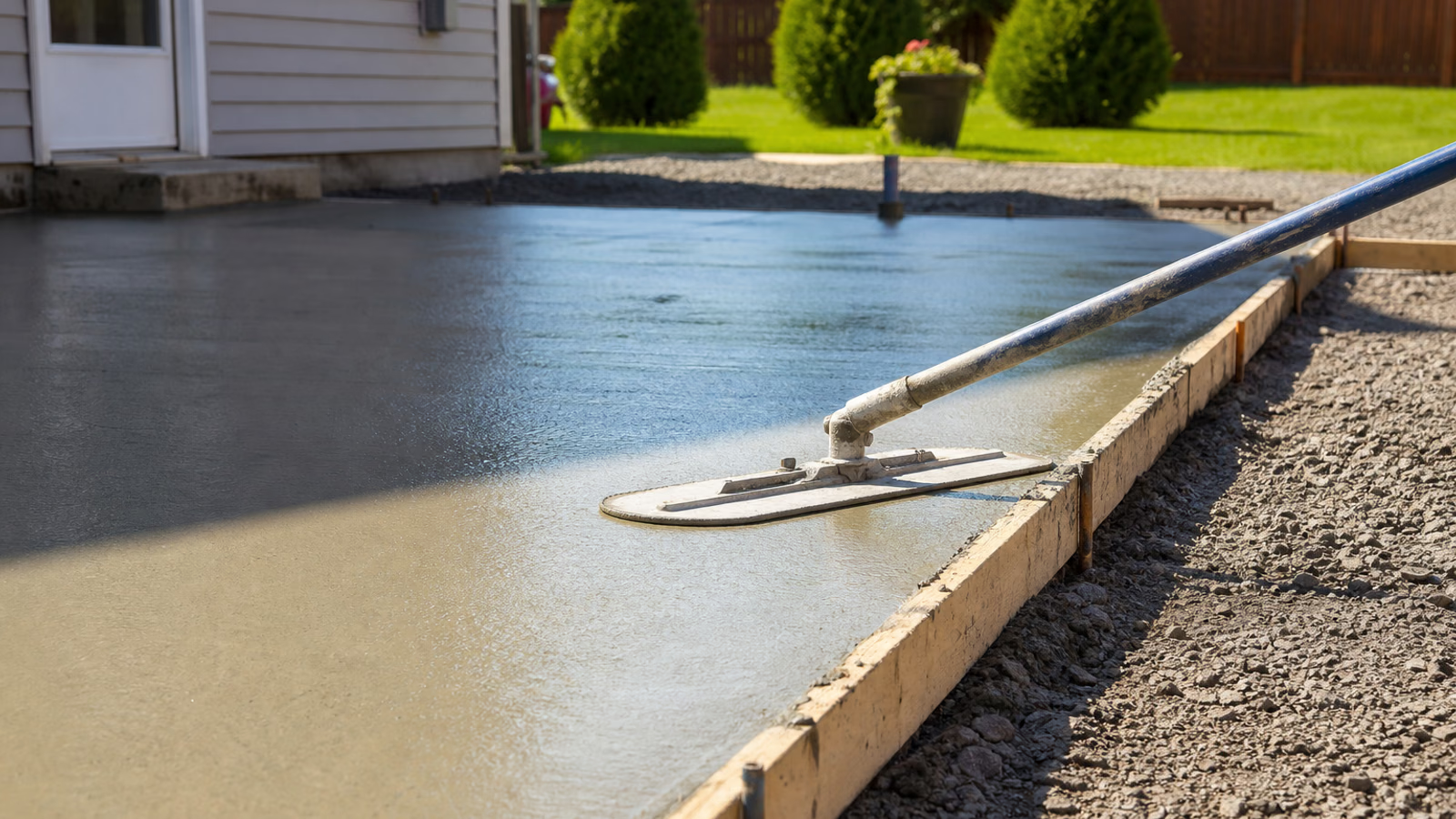
I helped a neighbor pour a 12×14 patio slab on a Saturday that hit 88°F by noon. We had the forms set, gravel compacted, and rebar in place. Then someone recalculated volume using feet and inches mixed on the same notepad — we were short by nearly a yard. The truck was already en route. We stretched the slab thin at the far corner and had to tear it out the following month.
Concrete math is unforgiving because the clock starts when the truck chute drops. Get volume right before you book delivery. Get helpers lined up. Have the bull float within arm's reach.
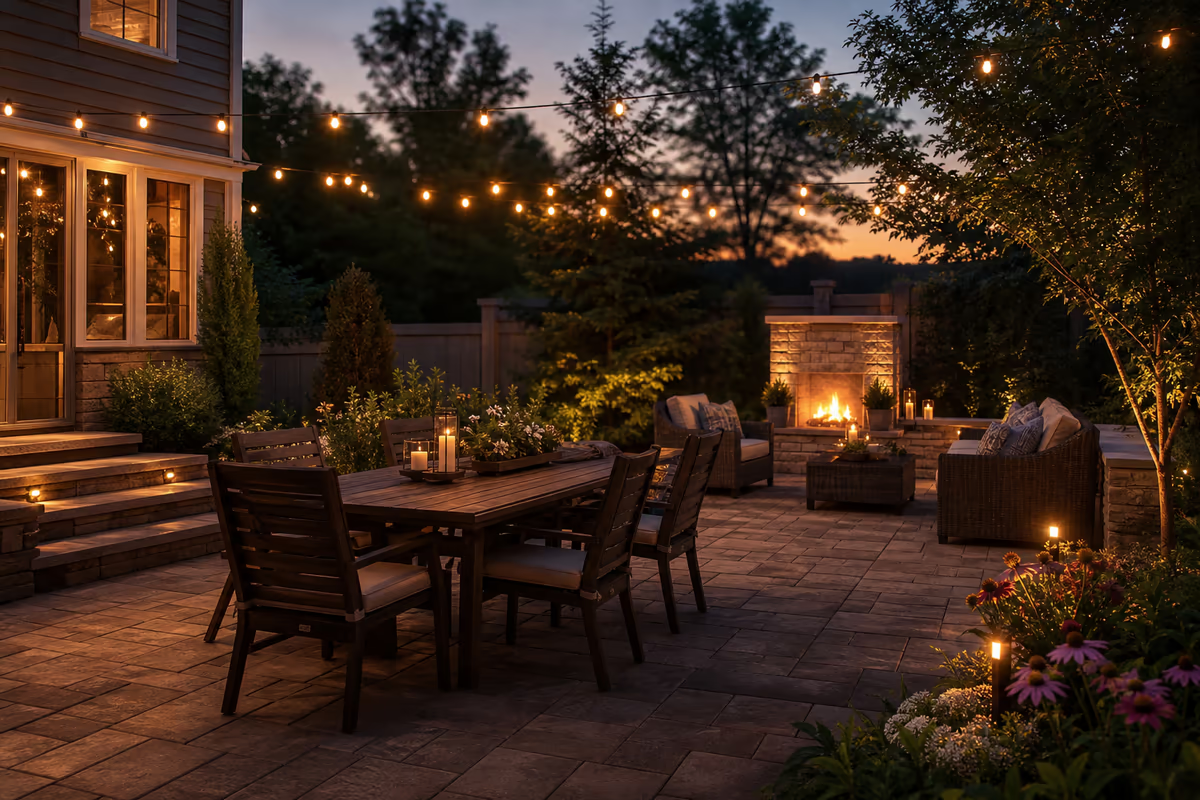
This guide covers a basic broom-finished backyard slab — not stamped concrete, not a heated driveway. If you want design inspiration first, our backyard patio design ideas walk through layout, furniture scale, and drainage before you commit to a pour.
How to Calculate Cubic Yards for a Slab
Measure length and width in feet, thickness in inches.
Cubic yards = (length × width × thickness in inches) ÷ 324
Same divisor as mulch — 324 sq ft at 1 inch equals one cubic yard.
| Patio Size | 4" Thick | 5" Thick | 6" Thick |
|---|---|---|---|
| --- | ---: | ---: | ---: |
| 10 × 10 ft | 1.23 yd | 1.54 yd | 1.85 yd |
| 12 × 12 ft | 1.78 yd | 2.22 yd | 2.67 yd |
| 12 × 16 ft | 2.37 yd | 2.96 yd | 3.56 yd |
| 16 × 20 ft | 3.95 yd | 4.94 yd | 5.93 yd |
Most residential patios use 4 inches where you walk and 5–6 inches if you mount a hot tub or outdoor kitchen. When in doubt, go thicker at the edges where forms flex.
Add 5–10% waste for spillage, uneven subgrade, and the last bit stuck in the chute. I order 10% on first-time DIY pours.
Example: 12 × 14 ft at 4 inches → 12 × 14 × 4 = 672 → 672 ÷ 324 = 2.07 yd → order 2.5 yards with waste.
Use our concrete calculator for odd shapes — L-shaped patios, fire pit pads, or separate step landings — without redoing arithmetic at the lumber yard.
Short Load Fees and Minimum Orders
Ready-mix plants often charge a minimum of 1–1.5 yards and a short-load fee under 4–6 yards depending on region. Bagged mix makes sense below about 1 yard:
- One 80 lb bag ≈ 0.6 cu ft
- 45 bags ≈ 1 cubic yard
- Mixing forty-five bags by hand is a workout — budget your back accordingly
For anything larger than a landing pad, a truck is worth it.
Base Prep: Where Slabs Fail
Concrete cracks when the ground moves. Your job is to give it a stable platform.
- Excavate 6–8 inches below finished patio height (4 inches gravel + 4 inches slab, more if you thicken edges)
- Compact gravel in lifts — 2–3 inches at a time with a plate compactor; jumping up and down does not count
- Slope away from the house — ¼ inch per foot (2% grade). A 12-foot run drops 3 inches. Use a string line and line level
- Install forms — straight 2×4 or bender board staked every 2–3 feet; coat with form release oil
- Vapor barrier optional — 6 mil poly on gravel if you are in a wet climate or finishing the slab as living space later
Skip rebar on a small broom-finish patio and many contractors use fiber mesh in the mix instead. For slabs over 10×12 or anything supporting weight, #3 rebar on a 18-inch grid or 6×6 wire mesh raised on chairs so it sits in the middle third of the slab — not on the gravel.
Pour Day Checklist
Concrete sets faster than beginners expect above 75°F.
- [ ] Helpers confirmed (minimum two besides you for anything over 2 yards)
- [ ] Wheelbarrows, rakes, bull float, magnesium float, edging tool, jointer, broom
- [ ] Hose and sprayer for cleanup — not your good garden hose
- [ ] Phone number of ready-mix plant in case truck is early
- [ ] Shade or windbreak if forecast is brutal
Start early. A 7 a.m. pour in July beats a 2 p.m. disaster.
Working the Slab: Order of Operations
- Chute or wheelbarrow — discharge as close to final grade as possible
- Screed — pull a straight 2×4 across forms in a sawing motion; fill low spots, rake excess forward
- Bull float — push and lift once; do not overwork or bleed water pools on top (weak surface)
- Wait for bleed water to evaporate — timing depends on heat and mix; typically 30–90 minutes
- Edge and joint — run edging tool against forms; cut control joints ¼ depth every 8–10 feet or slab width, whichever is less
- Broom finish — light drag across nearly stiff surface for traction
Control joints are not decoration. They tell cracks where to go. Skip them and random cracks find your nicest corner.
Curing: The Week After
Keep the slab damp for 5–7 days. Mist with a hose, cover with plastic, or use curing compound sprayed right after finishing. Fast drying in hot sun produces surface crazing — fine spiderweb cracks that look ugly forever.
Do not walk on it for 24 hours. Wait 7 days before moving patio furniture. Give it 28 days before you mount a hot tub or grill island — full strength takes a month even when it feels hard the next morning.
Common DIY Mistakes
| Mistake | What Happens | Fix |
|---|---|---|
| No slope | Water runs toward foundation | Regrade gravel before pour |
| Weak base | Slab settles and cracks | Compact gravel properly |
| Too wet a mix added on site | Weak surface, scaling | Accept slump from plant; do not hose extra water |
| Finishing while bleed water sits | Dusty, flaky top | Wait it out |
| No control joints | Random cracks | Plan joints in layout sketch |
If your patio connects to a fire pit area, pour the slab and fire pad as separate pours with a control joint between them — heat and frost move differently on each mass.
When to Hire Instead
Call a pro if:
- The patio is larger than you can screed in one truck's working time (roughly 4 yards before heat becomes the enemy)
- You need stamped or colored finish the first time
- Access is tight and trucks cannot reach — pumping adds cost but saves backs
- Local code requires inspections or engineered specs for attached slabs
A basic broom-finish slab is learnable. The math and the base prep are what separate a 20-year patio from a one-season regret.
Measure twice, order with waste built in, compact the gravel like you mean it, and keep a hose ready for curing — not for thinning the mix.
Topics covered
- concrete patio
- DIY slab
- backyard
- pour planning
Frequently Asked Questions
How much concrete do I need for a 12x12 patio at 4 inches thick?
About 1.78 cubic yards before waste. Order 2 yards with a 10% buffer for spillage and uneven subgrade. Use length × width × depth in inches, then divide by 324.
How thick should a backyard patio slab be?
Four inches is standard for foot traffic. Go 5–6 inches if you are mounting a hot tub, outdoor kitchen, or heavy grill island. Thicken the edges if forms flex under concrete weight.
How long before I can walk on a new concrete patio?
Wait at least 24 hours before foot traffic. Keep furniture off for 7 days and heavy loads like hot tubs for 28 days while the slab reaches full strength.