How Much Mulch Do I Need? A Depth Guide for Beds, Trees, and Paths
Two inches on a flower bed is not the same as four inches around a maple. Here is how to measure your beds, pick the right depth, and order mulch without a truckload of leftovers rotting in the driveway.
I Used to Guess by the Bag Count
My first spring managing a community garden, I ordered twelve cubic yards of shredded hardwood because the supplier said that was "about right" for our plot. We needed four. The rest sat under a tarp until autumn, when we finally spread it on paths we had not planned to mulch at all.
Mulch math is boring until you pay for delivery twice or watch a bed suffocate because someone piled it against tree trunks like a volcano. The fix is simple: measure in square feet, pick a depth in inches, convert to cubic yards, then add a small buffer for uneven ground.
Why Depth Matters More Than Brand
Mulch does three jobs at once. It slows evaporation, blocks light so weed seeds struggle, and breaks down into organic matter over time. Too little and you are basically decorating bare soil. Too much and you trap moisture against bark, invite rodents, and starve shallow roots of air.
| Application | Recommended Depth | Notes |
|---|---|---|
| --- | ---: | --- |
| Annual flower beds | 2–3 inches | Refresh once a year; fluff in spring |
| Shrub and perennial borders | 2–4 inches | Thicker in hot, dry climates |
| Around trees (donut, not volcano) | 2–3 inches | Keep mulch off the trunk flare |
| Vegetable paths (straw, not bark) | 3–4 inches | Replenish mid-season as it compacts |
| Play areas (engineered wood fiber) | 9–12 inches | Follow manufacturer spec; not the same as landscape mulch |
Bark nuggets float and wash on slopes. Shredded hardwood mats together and stays put. Dyed mulch holds color but adds nothing extra for plants — buy it for looks, not nutrition.
Step 1: Measure Your Beds in Square Feet
Walk the yard with a tape measure or use a long rope to outline irregular beds, then break them into rectangles.
- Rectangle: length × width
- Circle: 3.14 × radius² (a 10-foot circle ≈ 314 sq ft)
- Irregular bed: measure the longest length and widest width, multiply, then subtract obvious gaps like stepping stones
Round up slightly. It is better to have half a yard left for topping off than to stop mid-bed and make a second trip.
Example: a front border 40 feet long and 4 feet wide = 160 sq ft. A side bed 12 × 15 = 180 sq ft. Total = 340 sq ft.
Step 2: Convert Square Feet and Inches to Cubic Yards
The formula landscapers use:
Cubic yards = (square feet × depth in inches) ÷ 324
Why 324? One cubic yard covers 324 sq ft at 1 inch deep (27 cubic feet × 12 inches).
For our 340 sq ft bed at 3 inches:
340 × 3 = 1,020 → 1,020 ÷ 324 ≈ 3.15 cubic yards
Order 3.5 yards if the supplier has a minimum, or buy 40–45 bags if you are hauling yourself (most bags are 2 cu ft; 27 bags ≈ 1 cubic yard).
Our mulch calculator runs this math for multiple beds at once. Plug in each zone with its own depth — paths at 2 inches, tree rings at 3 — and it totals cubic yards and bag counts before you call the nursery.
Step 3: Add 5–10% for Settling and Uneven Soil
Fresh mulch fluffs up in the truck. After rain and foot traffic, it settles. A slightly bumpy bed also eats more volume than a flat spreadsheet suggests.
I add 10% on new installations where soil was recently disturbed. On a simple refresh where an inch of old mulch is still in place, I only top up the difference to reach target depth.
How to Spread Without the Classic Mistakes
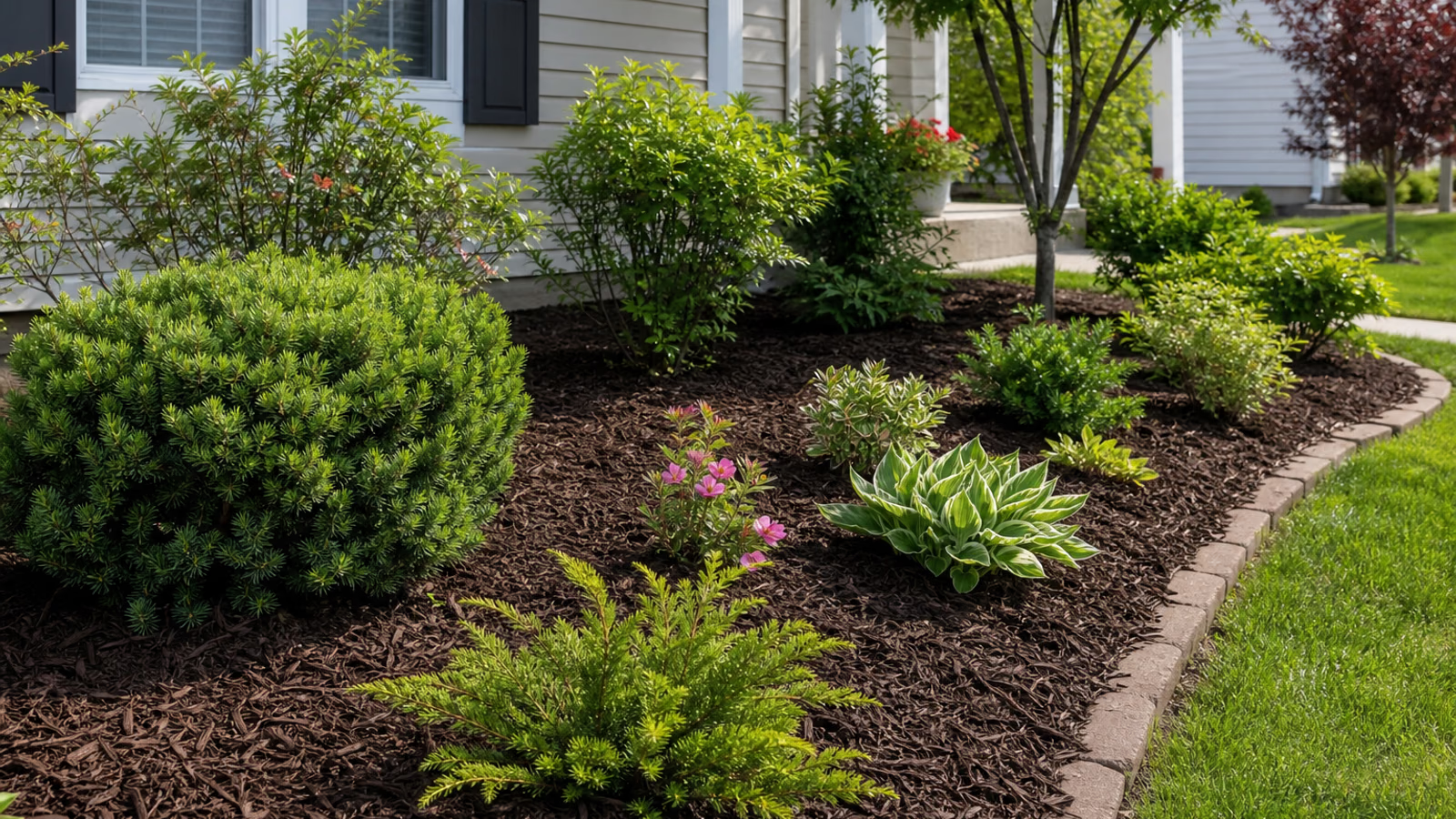
Volcano mulching kills trees. Piling mulch against the trunk traps moisture on bark that evolved to stay dry. Pull mulch back until you see the root flare — where the trunk widens at the soil line. Think donut, not chimney.
Do not mulch until weeds are dealt with. A thick layer on top of dandelion leaves does not stop dandelions. They punch through. Hand-pull or hoe first, water the bed, then spread.
Keep mulch off crowns of perennials. Hostas and peonies rotting at the center is usually mulch piled too deep over winter.
Work in small sections:
- Edge the bed so mulch does not slide onto lawn
- Spread evenly with a hard rake or your hands (gloves help on shredded bark)
- Water lightly to settle dust — not a flood
- Step back and look for thin spots against the back row
When to Mulch Through the Year
In most of the US, spring after soil warms and perennials emerge is the main window. A second light layer in late fall protects shallow roots in cold zones and reduces heaving on heaving clay.
Avoid mulching frozen ground — you lock in ice, not warmth. In the Deep South, skip thick spring mulch until summer heat arrives or you cook tender roots.
If you are refreshing native plant beds, leave some bare soil patches for ground-nesting bees. Not every inch needs wood chips.
Bagged vs Bulk: What I Actually Buy
| Situation | Buy | Why |
|---|---|---|
| Under 2 cubic yards total | Bagged | Easier to store leftovers dry |
| 3+ yards, open truck access | Bulk blown or dumped | Half the cost per yard |
| Steep yard, no driveway | Bags | Delivery trucks will not reach |
| Dyed red/black for front curb appeal | Bags | Color batch matches |
Bulk mulch is sold by the cubic yard. Bagged is sold by cubic feet — always check the label. A "3 cu ft" bag is not a yard.
Quick Reference Depth Chart
| Bed Size | 2" Depth | 3" Depth | 4" Depth |
|---|---|---|---|
| ---: | ---: | ---: | ---: |
| 100 sq ft | 0.62 yd | 0.93 yd | 1.23 yd |
| 200 sq ft | 1.23 yd | 1.85 yd | 2.47 yd |
| 400 sq ft | 2.47 yd | 3.70 yd | 4.94 yd |
| 800 sq ft | 4.94 yd | 7.41 yd | 9.88 yd |
Round up to the supplier's increment. Most landscape yards sell in half-yard steps.
After You Spread
Water the bed once if mulch is dusty. Check depth with a ruler in a few spots — homeowners almost always thin out the back edge along a fence. Top off before you put tools away.
Plan to fluff and top-dress annually rather than letting old mulch compact into a waterproof crust. A metal rake in early spring breaks up the surface and buys you another season of weed suppression.
Mulch is one of the cheapest upgrades in a home garden when you measure first. Get the depth right, keep it off tree trunks, and the yard looks finished long before the plants fill in.
Topics covered
- mulch
- garden beds
- landscaping
- soil moisture
Frequently Asked Questions
How deep should mulch be in a flower bed?
Spread 2–3 inches on annual and perennial beds. Refresh once a year in spring. Going thicker than 4 inches on small plants can trap moisture against stems and invite rot.
How many bags of mulch equal one cubic yard?
Most bags are 2 cubic feet. Thirteen to fourteen bags make roughly one cubic yard (27 cubic feet). Always check the label — bag sizes vary.
Should mulch touch tree trunks?
No. Pull mulch back until you see the root flare where the trunk widens at soil level. Piling mulch against bark causes decay and invites pests — sometimes called volcano mulching.